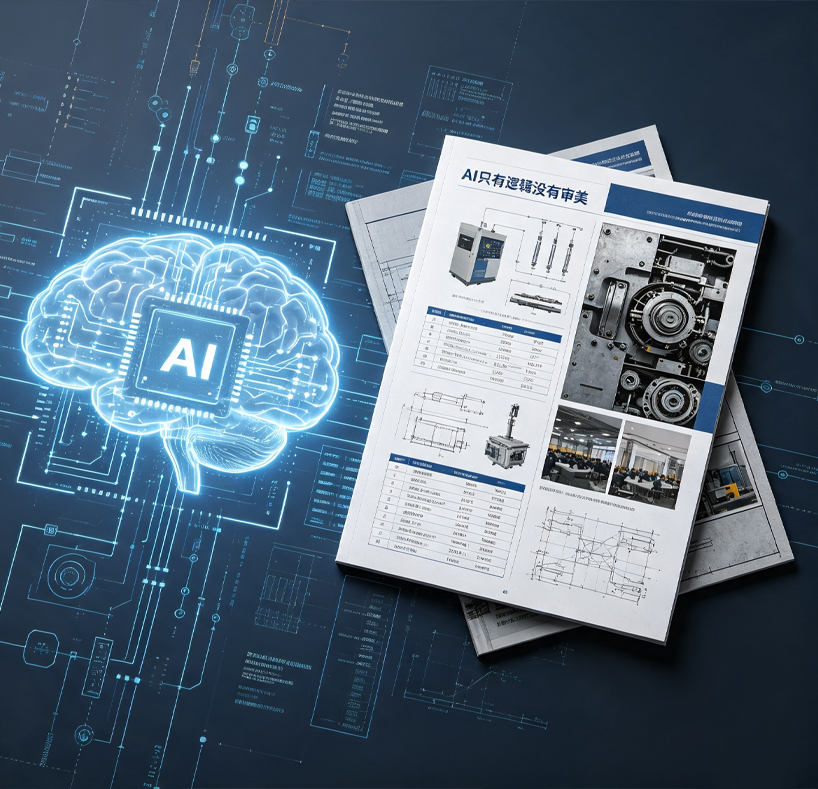
With the proliferation of AI drawing, intelligent layout,and copywriting tools, many manufacturing companies are asking a commonquestion: Now that AI can generate brochure drafts, product illustrations, andlayouts in minutes—at extremely low cost and high efficiency—do we still needto pay a professional design agency to create our corporate brochures?
The abundance of lightweight templates and one-clickgeneration tools has led many to mistakenly believe that brochure design hasbecome "de-professionalized." However, practical experience indeep-rooted manufacturing brand marketing proves that while AI solves theproblem of "availability," professional design agencies solve thecore issues of "usability, conversion potential, zero errors, and premiumquality." In the manufacturing sector, where professionalism, rigor, andcommercial value are paramount, AI can serve as an auxiliary tool, but itcannot replace professional design agencies. Formal commercial brochures forthe manufacturing industry still require the deep involvement of expert teams.
I. AI Can Only Handle Basic, Superficial Tasks and HasInherent Industry Limitations
It is undeniable that AI offers significant auxiliary valuein brochure production, capable of quickly completing basic, repetitive tasks:batch-writing foundational corporate copy, generating simple equipmentrenderings, applying templates for image-text composition, and rapidlyproducing initial digital drafts. This greatly reduces the time and labor costsof early-stage material creation.
However, once applied to formal scenarios such ascommercial use, business negotiations, bidding, and high-end exhibitions, AI'sshortcomings are infinitely magnified, presenting numerous unavoidable flaws:
1.Template-Based Assembly Line Output Lacks Exclusive Brand Aesthetics
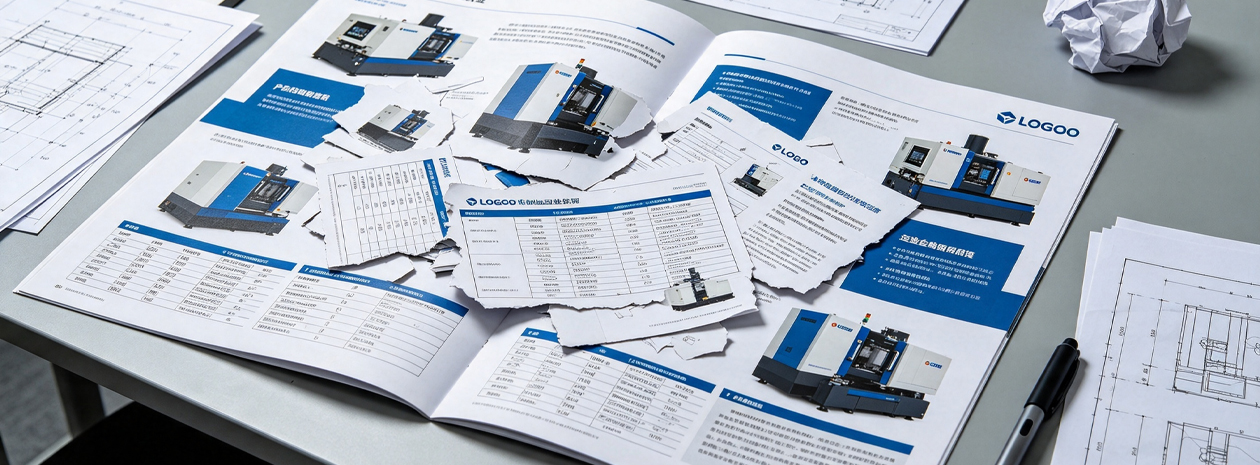
AI-generated visuals rely on generic online libraries,resulting in homogeneous outputs devoid of customized aesthetic thinking. Theymechanically apply fixed layouts and color schemes, failing to matchcorresponding visual tones for different manufacturing sectors—such asprecision machinery, new energy equipment, or automated production lines.High-end manufacturing requires a calm, technological, and substantial texture,yet AI often mixes cheap gradients and flashy decorations, undermining thegrand and professional aura of industrial brands. Furthermore, it randomlypairs fonts and colors, ignoring corporate VI guidelines. Stretched logos andcolor clashes are everywhere, demonstrating a complete lack of brand-consistentaesthetic awareness.
2.Mere Generation Logic, Lacking Hierarchical Aesthetics and Reading Comfort
AI simply divides pages left and right or stacks images andtext without distinguishing primary from secondary elements or understandingvisual flow. Industrial brochures contain extensive equipment photos, parametertables, case studies, and qualification certificates. Designers must usewhitespace, font size hierarchy, and spacing to create a comfortable readingrhythm. AI does not understand density balance; it results in cluttered text,chaotic whitespace around large images, and messy tables. To engineers andprocurement managers, this looks jarring and lacks the layout aesthetics of acommercial brochure, failing to guide clients toward key information.
3.Lack of Industrial Scene Aesthetics Leads to Distorted and IncongruousMechanical Images
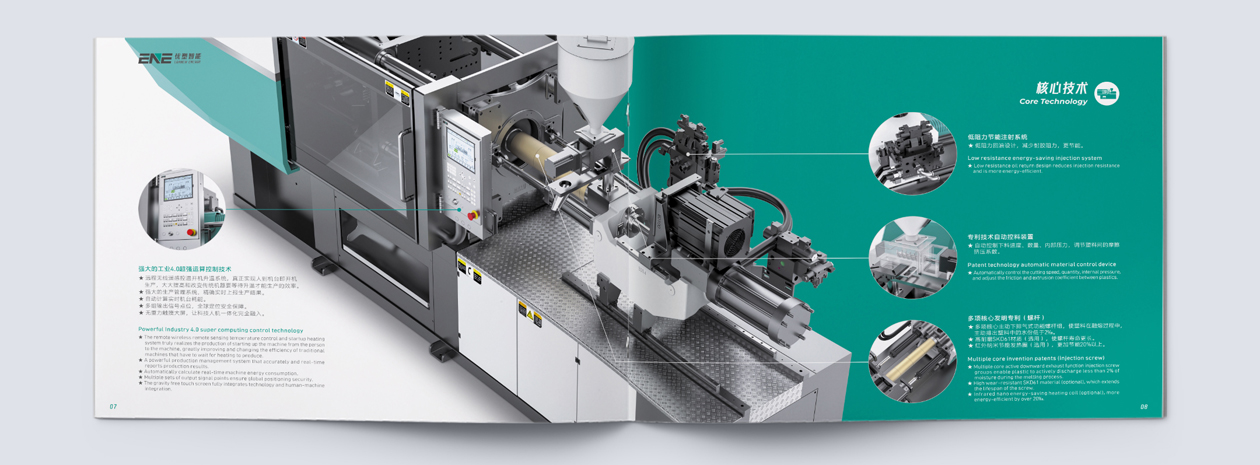
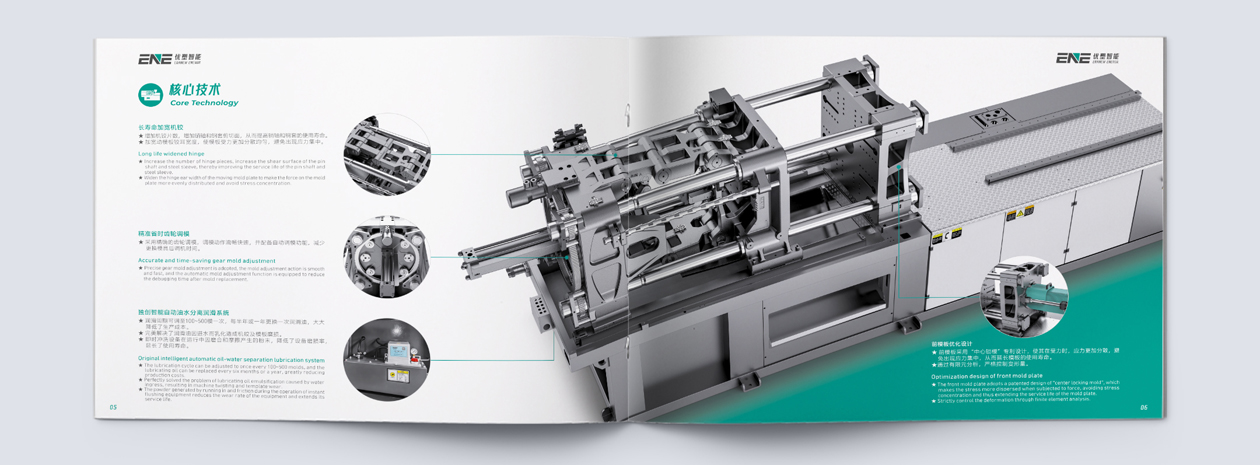
When it comes to equipment structure diagrams, productionline panoramas, and component displays, AI merely pieces together graphicsthrough algorithms, lacking industrial realistic aesthetics. Generatedmechanical parts suffer from disproportionate scaling, false metallic texturesand lighting, and distorted factory spatial perspectives, resulting in a cheapand unrealistic look. Professional designers understand the texture expressionof metal, sheet metal, and CNC equipment, utilizing light, shadow, and compositionto highlight the hardcore beauty of precision manufacturing—something AI,relying solely on algorithmic logic, cannot autonomously perceive.
4.Blank in Industry Marketing Logic; Aesthetics That Fail to Serve Conversions
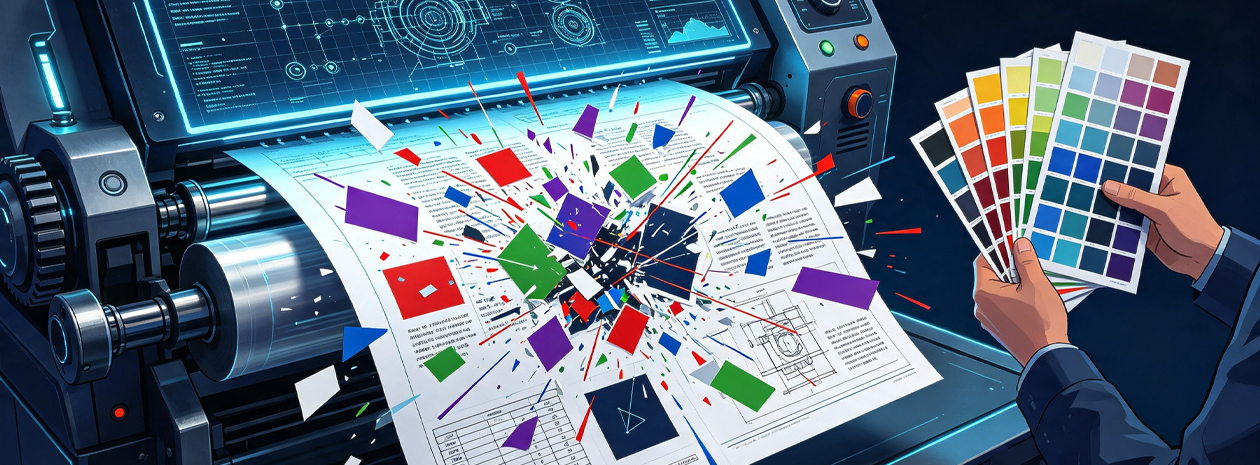
AI does not understand the aesthetic preferences of B2Bclients. Domestic industrial brochures require a simple, rigorous, anddignified visual style; foreign trade brochures need minimalist, internationallayouts; exhibition brochures need impactful, focal-point-driven imagery. AImerely generates flashy, exaggerated content based on generic internetaesthetics, failing to align with the stable and pragmatic tastes ofprocurement officers and reviewers, thus making it difficult to build trust.
II. Professional Design Agencies Control the Core ValuesAI Cannot Cover
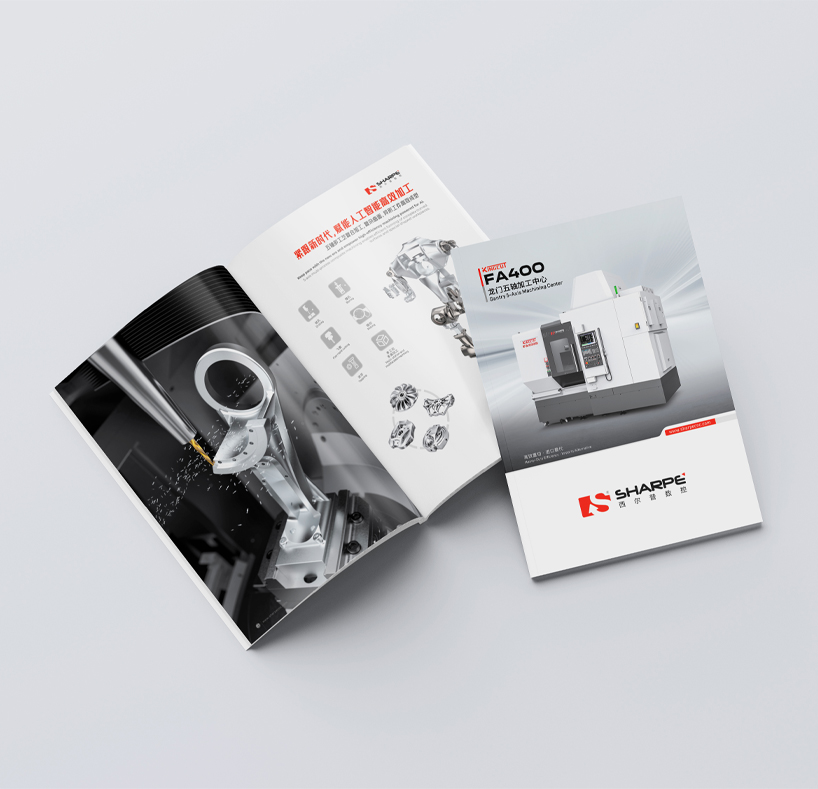
Manufacturing brochures are never mere "image-textsplicing"; they are core business materials for securing large orders,building brand trust, and winning bids. Unlike ordinary commercial brochures,industrial brochures demand extremely high standards in content logic,professional rigor, visual texture, and final output results—and these corevalues entirely depend on professional design agencies.
The advent of AI is eliminating low-end designers who onlydo basic typesetting without critical thinking, not professional industrialdesign services. For the manufacturing industry, a promotional brochure is theface of the corporate brand and the cornerstone of trust for undertaking majorcommercial collaborations; it is never a simple image-text template.
In this era empowered by AI, manufacturing brochures stillcannot do without professional design agencies. The true value of an industrialbrochure has never been about being "produced quickly," but ratherabout being professionally error-free, high-end with texture, commerciallyviable upon printing, and capable of converting leads during negotiations. Thisis the fundamental confidence that AI can never replace a professional designteam.